


Image: MIT
Engineers at MIT are successfully turning raw plastic waste into high-strength floor trusses via large-scale additive manufacturing.
Notably, the trusses proved their mettle by supporting 4,000 pounds of pressure during testing. That is double the load-bearing requirements set by U.S. federal housing standards.
The construction industry has long relied on timber and concrete. MIT’s team, led by researcher AJ Perez, believes the answer to the global housing crisis is literally floating in our oceans and piling up in our landfills.
“We’ve estimated that the world needs about 1 billion new homes by 2050. If we try to make that many homes using wood, we would need to clear-cut the equivalent of the Amazon rainforest three times over,” said Perez, a lecturer in the MIT School of Engineering.
“The key here is: We recycle dirty plastic into building products for homes that are lighter, more durable, and sustainable,” Perez added.
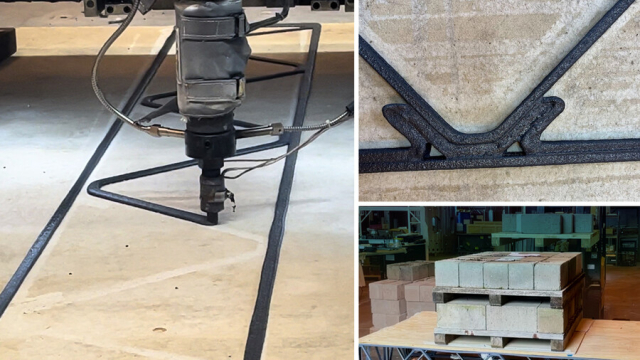
The team was able to rapidly transform raw pellets into heavy-duty, construction-ready components. In a practical test of the system, the MIT team assembled a plywood-topped floor frame using four 8-foot plastic trusses, each weighing just 13 pounds — much less than their timber counterparts.
These structural components are efficient to produce, with a large-scale printer churning out a single truss in under 13 minutes.
To optimize the structure for real-world use, the team utilized computer simulations to identify a design with a high stiffness-to-weight ratio. It ensured the floor remains rigid and sag-free under pressure.
Source: MIT News
Image: MIT