


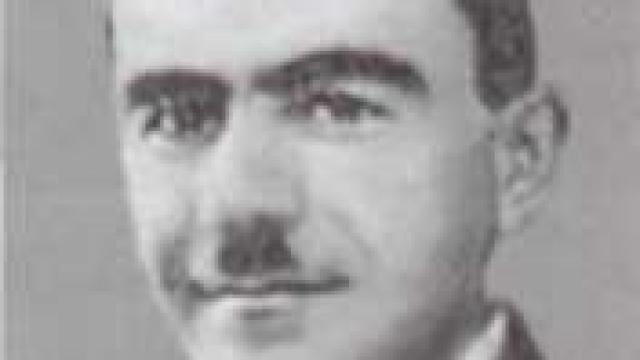
Image: Hovhannes Melik-Pashayan
Hovhannes Melik-Pashayan, an Armenian Soviet power engineer, was born on May 1, 1889, in Shushi. He graduated from the St. Petersburg Polytechnic Institute in 1913. His designs contributed to the construction of several pioneering hydropower plants in the USSR, including the Zemo-Avchalinsky HPP (named after Lenin), as well as those in Rion, Yerevan, Leninakan, and Stepanakert.
The 'Approximate Plan for the Electrification of Armenia,' developed by Melik-Pashayan in 1921-22, laid the foundation for the development of energy industry in the Armenian Soviet Socialist Republic. He was later elected a member of the USSR Central Executive Committee and was awarded the Order of the Red Banner of Labor.
On May 6, 1927, the Council of Labor and Defense of the USSR adopted a resolution for the construction of the Dzoraget (Kolageran) District Power Plant. Hovhannes Melik-Pashayan, an experienced power engineer, was also part of the engineering team involved in the construction of the hydroelectric power plant.
In 1932, after the successful operation of the DzoraHPP, Melik-Pashayan was sent to Uzbekistan with the task of constructing a hydroelectric power plant on the Chirchik River. This assignment, however, would prove fatal for the Armenian engineer…
Soviet Uzbekistan's economy was in urgent need of electricity, and the expertise of Comrade Melik Pashayev in the design and construction of the DzoraHPP proved to be extremely valuable.
On April 28, 1932, the Council of Labor and Defense approved the construction of the Chirchik Energy Complex, which included two hydroelectric power plants and a nitrogen fertilizer plant. The fertilizer plant was designed to be the main consumer of the electricity generated by the hydroelectric plants.
The development of the Chirchik Hydropower Complex marked a significant milestone in the growth of Uzbekistan’s electric power industry. At the time construction began, the design capacity of the Chirchik HPP alone was three times greater than the combined capacity of all power plants in the republic.
The design and construction of the Chirchik hydroelectric power plant was led by the Soviet economist, statesman and political figure, member of the “first opposition” Dav Rozit.
Stalin began to “persecute” Rosit in 1929, when he defeated the "right" Bukharin deviation was crushed. In his speech at the Central Committee plenum, Stalin remarked: "I see that Rosit has sworn to serve Bukharin. But his service is the most disastrous, because, in attempting to save Bukharin, he is actually leading to his downfall. It is not without reason that it is said, ‘An obliging bear is more dangerous than the enemy’."
Fearing to immediately remove Bukharin's supporter Rosit from his ranks, Stalin begins to “neutralize” the people around him one by one. Hovhannes Melik Pashayan was hit first. He was accused of causing damage and anti-Soviet activities...
The exact place and circumstances of Melik-Pashayan’s death are still unknown. According to the official version, he died in Leningrad on October 28, 1935 due to illness…
In January 1937, Dav Rozit, the first director of Chirchikstroy, was accused of sabotage, arrested, and subsequently executed.
Thus, the talented engineer who designed and built the DzoraHPP became an instrument in the hands of Stalin on the path of revenge on the politician Rosit. His fault was that he was in the wrong place at the wrong time. It turned out that he was caught in the crossfire…
Source: ECTI
Image: Hovhannes Melik-Pashayan